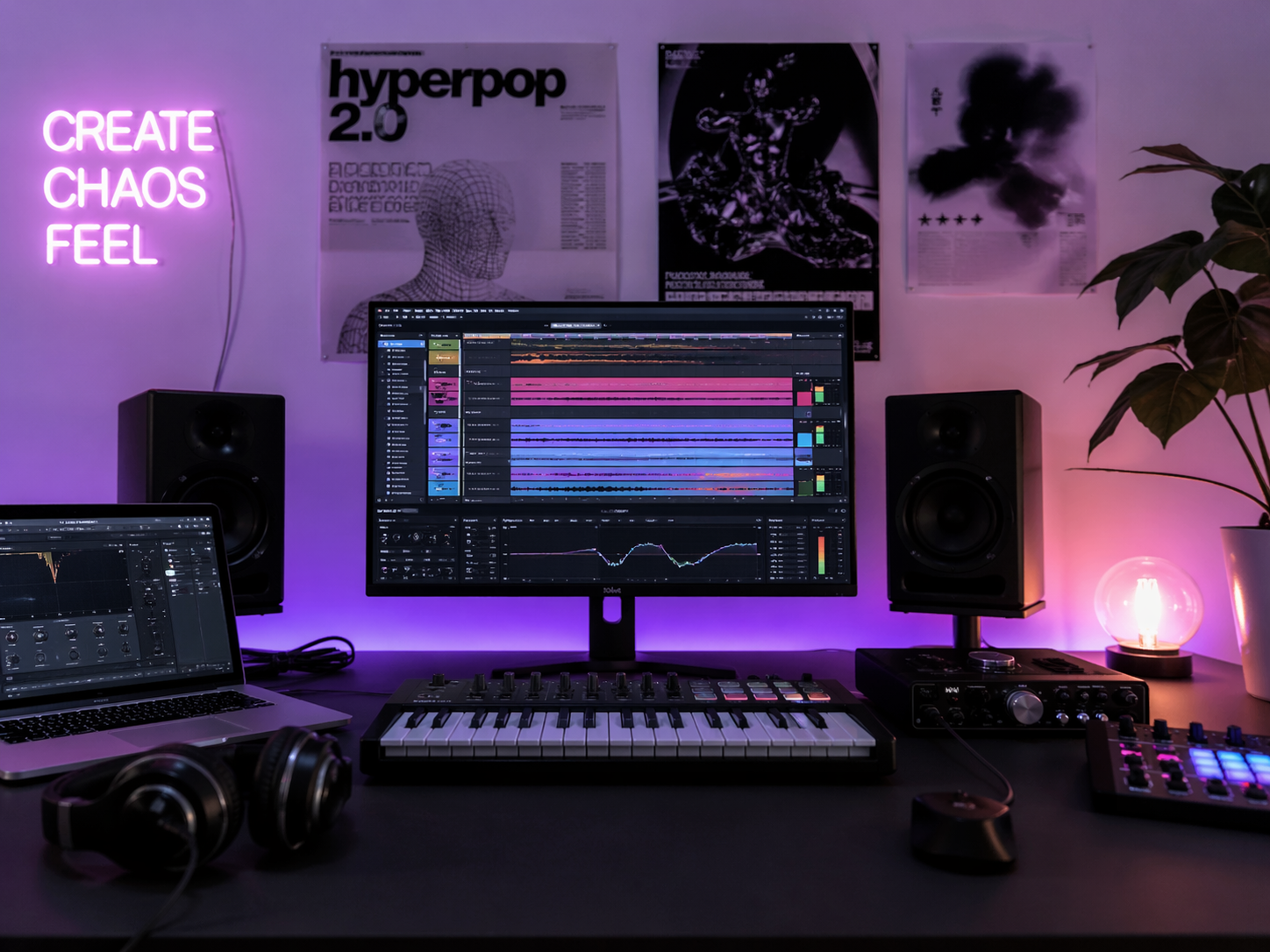
If you’ve been anywhere near music TikTok, SoundCloud, or underground Spotify playlists lately, you’ve probably felt it: something chaotic, emotional, and glitchy is creeping back into the spotlight. Call it Hyperpop 2.0 — not a revival, but a mutation.
From Noise to Nuance
The first wave of hyperpop — led by artists like 100 gecs, Charli XCX, and the late SOPHIE — was loud, abrasive, and intentionally overwhelming. Today’s version is more refined. Producers are keeping the digital chaos, but pairing it with tighter songwriting and emotional depth.
Think less “ear assault,” more “controlled distortion.”
The Sound Design Shift
What’s really trending isn’t just the genre — it’s the techniques behind it:
- Pitch-shifted vocals that still feel human
- Granular synthesis used subtly, not aggressively
- Glitch textures layered under clean pop structures
- Heavy use of automation for evolving soundscapes
This is a goldmine for producers. Tools like Ableton’s Granulator or plugins like Portal are becoming staples again — but used with restraint.
Emotion Is Back
Early hyperpop often leaned ironic. Now? It’s vulnerable.
Artists are blending diaristic lyrics with digital production. The contrast hits harder — robotic textures carrying very human stories. That tension is exactly why it resonates right now.
Why It’s Blowing Up Again
Three reasons:
- Listener fatigue with “perfect” pop — people want texture again
- DIY production culture — more bedroom producers experimenting
- Short-form content — glitchy, unpredictable sounds grab attention fast
What You Can Learn From It
If you’re making music, this trend is less about copying a sound and more about adopting a mindset:
- Don’t over-polish everything
- Let imperfections live in your mix
- Blend genres without asking for permission
- Design sounds that evolve, not loop
Quick Creative Exercise
Try this:
Take a clean vocal, duplicate it, and:
- Pitch one version +7 semitones
- Pitch another -5 semitones
- Add subtle distortion and automate the volume
Blend them under the original. You’ll instantly hear that modern hyperpop texture — but still musical.
Final Thought
Hyperpop never really died — it just matured. And right now, it’s becoming one of the most interesting playgrounds for producers who want to push boundaries without losing emotional connection.
If you’re experimenting in 2026, this is one lane worth exploring.