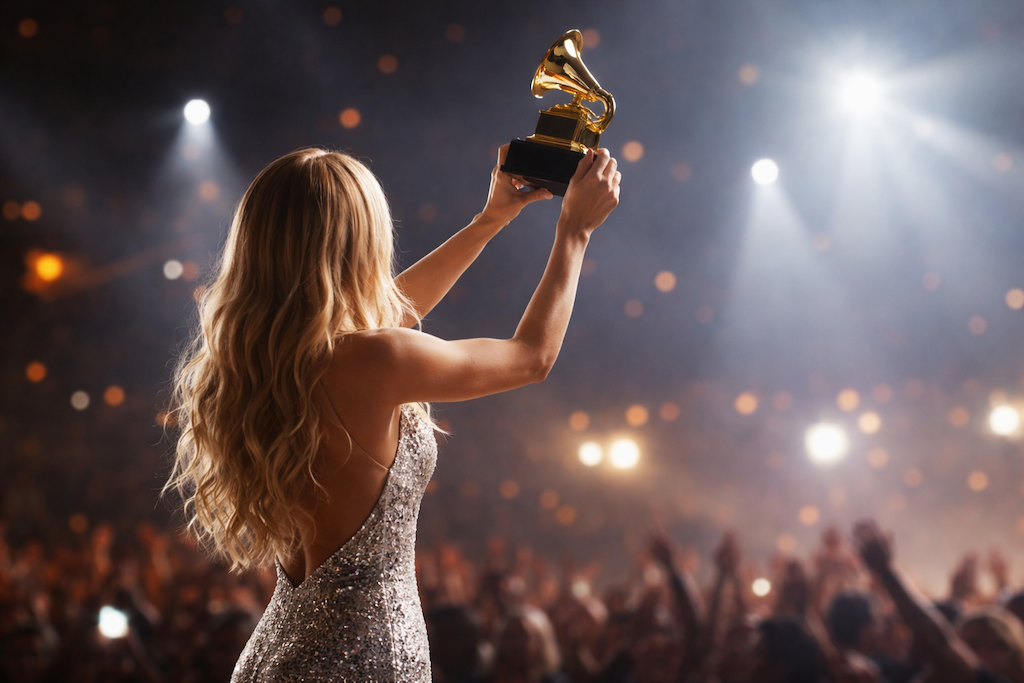
For as long as music has been recorded, shared, and argued about, we’ve tried to rank it.
Best album. Best artist. Best song of the year.
The Grammys, the BRIT Awards, the Mercury Prize, music magazines, fan polls, Spotify charts — all of them are different versions of the same human impulse:
We want music to feel official. Confirmed. Validated.
But that raises a question that every music fan eventually asks (especially after seeing a controversial winner or a painful snub):
Does great music need awards to matter?
Short answer: no.
Long answer: awards still matter — just not in the way people think.
Let’s unpack it properly.
Awards are real… but they’re not “truth”
Awards are real in the sense that they create outcomes:
- Careers change overnight
- Audiences grow fast
- Tours sell out
- Headlines follow
- Budgets increase
- Labels take risks (sometimes)
An award can turn an artist from “underrated” into “unavoidable” within 24 hours.
But here’s the thing:
Awards are not a measurement of musical greatness.
They are a measurement of industry consensus at a specific moment in time.
And those are two very different things.
Industry consensus is affected by:
- Politics (yes, even in music)
- Trends and timing
- Campaigning
- Voting demographics
- Genre bias
- Media narratives
- And sometimes… plain luck
So if you ever watched an awards show and thought, “Wait, that won?”
Congratulations — you were paying attention.
Great music matters in private first
A lot of music that becomes “classic” doesn’t start that way.
Think of the albums that changed your taste.
The ones you replayed alone at 2AM.
The songs that became part of your personality for a year.
Most of the time, those aren’t the biggest award winners. They’re the songs that:
- Helped you survive something
- Explained you to yourself
- Made you want to create
- Made you feel less alone
- Gave you energy when you had none
That’s the real power of music.
Not “Best Album of the Year.”
But:
Best album for your life at that moment.
And no committee on earth can vote on that.
Beyoncé’s Grammy moment (and why it’s a perfect example)
In 2025, Beyoncé won Album of the Year at the Grammys for Cowboy Carter.
If you’re a fan, it probably felt overdue.
If you’re not a fan, it still felt culturally significant.
Either way, it became a moment — not just a trophy.
And that’s exactly why awards matter as events, not as absolute truth.
Because that win didn’t just say “this album is good.”
It said things like:
- This album is part of the mainstream conversation now
- Genre borders are shifting again
- The industry is acknowledging something it resisted before
- This is a historical checkpoint, not just a result
Even if you don’t agree with the Grammys, you can’t deny the impact of that recognition.
But here’s the key point:
Beyoncé didn’t become great because she won.
She won because she was already great.
The award didn’t create the art.
It reacted to it.
Why awards still matter (even if they don’t define greatness)
A lot of music fans take the “awards don’t matter” stance.
And I get it.
But awards do matter — just not as a scoreboard for greatness.
They matter in these ways:
1) Awards give artists leverage
Recognition can increase an artist’s freedom.
More freedom = better projects.
Not always. But often.
Sometimes the award isn’t the “reward.”
It’s the permission slip.
To take creative risks.
To hire better musicians.
To get a bigger stage.
To push a weird idea into reality.
2) Awards create discovery pipelines
A huge number of listeners still find music through “winner” lists.
It’s not romantic, but it’s real.
People don’t have infinite time.
So they outsource discovery to shortcuts:
- Grammys
- Pitchfork
- Apple Music features
- Spotify playlists
- TikTok trends
Awards don’t tell you what’s best — but they tell you what’s being noticed.
3) Awards create shared cultural memory
Even people who don’t care about awards remember the headlines.
And those headlines become cultural timestamps.
Like:
- “That’s the year that album won.”
- “That was the year everyone argued about it.”
- “That was the performance people still replay.”
It’s not pure music. It’s music history.
The downside: awards distort how we listen
Here’s where things get toxic.
Awards can push us into a mindset where music becomes:
- A competition
- An argument
- A ranking system
- A court case
And that’s a very unnatural way to experience art.
Because art doesn’t behave like sports.
There isn’t one “best” album.
There are albums that:
- Reshape a genre
- Define a generation
- Capture emotion perfectly
- Change a musician’s future
- Change your life
Sometimes those overlap. Sometimes they don’t.
But when we reduce music to “winner vs loser,” we lose something important:
The ability to let music be personal.
Some of the greatest music ever made didn’t win (or wasn’t even invited)
This is the part that makes every awards show feel a little fragile.
Great music can exist outside the system completely.
Some of the most influential records were:
- Ignored at release
- Rejected by critics
- Too early for the culture
- Too weird for radio
- Not marketable enough
- From scenes the industry didn’t understand
Then years later? Suddenly they’re “legendary.”
A lot of music isn’t built for trophies.
It’s built for obsession.
And obsession is a stronger signal than any award.
Because obsession creates:
- Cover versions
- Samples
- New genres
- Lifelong fans
- Musicians who pick up instruments
- Future classics
Awards don’t always detect that early.
They mostly reward what the industry is ready to accept right now.
The real reward: does it survive time?
Here’s a practical test:
If every award disappeared tomorrow, would the music still matter?
If the answer is yes, that’s real greatness.
Because the “real reward” isn’t a trophy.
It’s endurance.
It’s:
- People replaying it 10 years later
- Musicians still copying the sound
- Songs still hitting emotionally
- A record still being “alive”
Awards can accelerate legacy.
But they rarely create it.
Legacy comes from replay value, meaning, influence, and emotional truth.
So… does great music need awards?
No.
Great music doesn’t need awards to matter.
It matters because it works — emotionally, musically, culturally, or personally.
Awards are just one of the world’s ways of saying:
“We noticed.”
Sometimes that “we” is accurate.
Sometimes it’s late.
Sometimes it’s wrong.
Sometimes it’s political.
Sometimes it’s a correction.
But even when awards get it right, they’re still not the point.
The point is what happens when the music meets a human being.
One person, headphones on, volume up, world off.
That moment is the award.
Everything else is paperwork.
Final thought
Awards can be meaningful.
They can be historic.
They can even be deserved.
But if you need a trophy to prove music is great…
you’re listening to the wrong thing.
Because the best music doesn’t ask for permission.
It just stays.