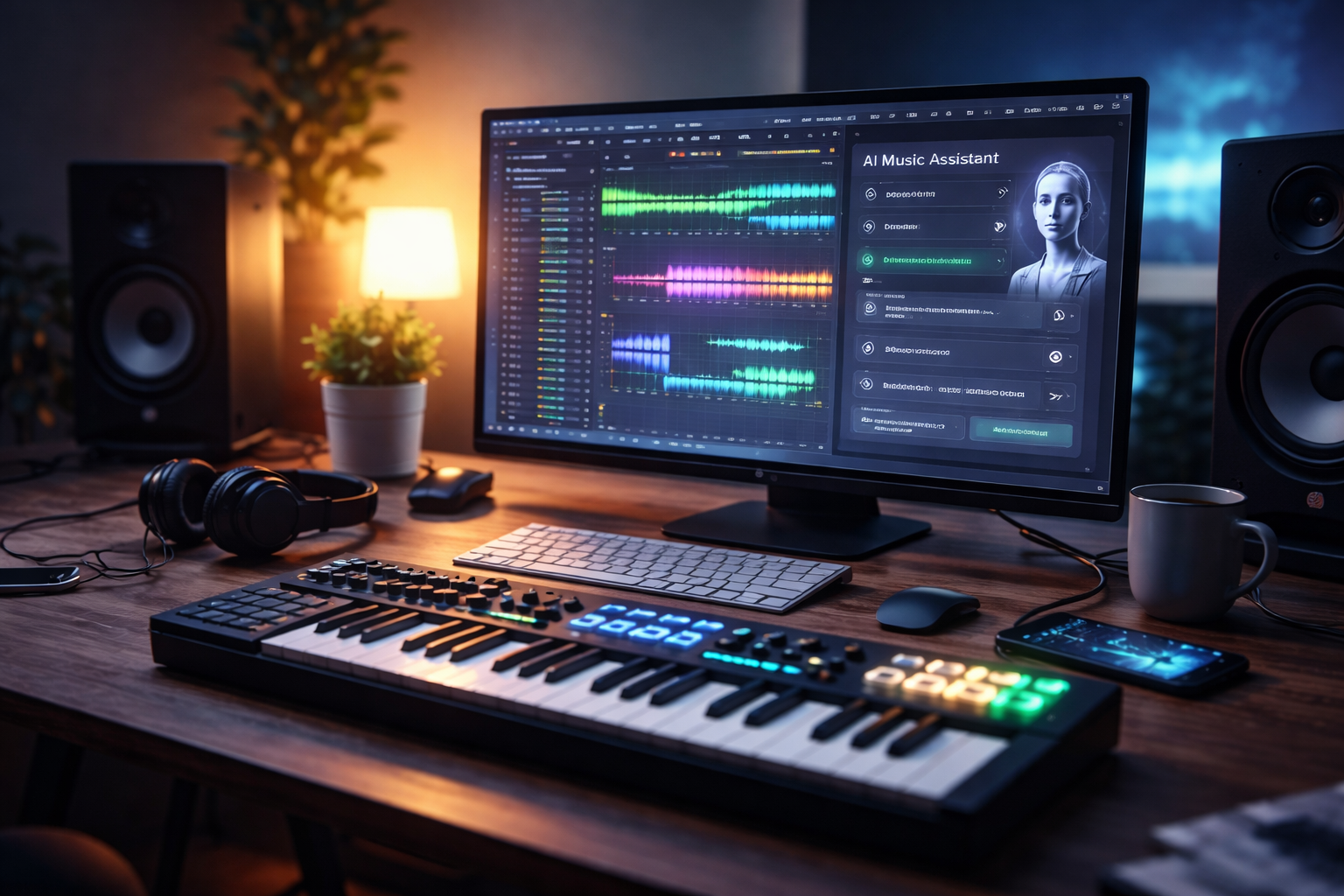
In 2026, artificial intelligence is no longer a futuristic add-on in music production — it’s part of the creative fabric. From songwriting assistants to AI-powered mastering chains, the line between human intuition and machine intelligence is not blurred — it’s collaborative.
But here’s the real question musicians are asking today: Is AI replacing creativity, or expanding it?
AI as a Creative Partner, Not a Replacement
The biggest shift in 2026 is mindset. In 2023, many artists feared AI. In 2026, most serious producers treat it like a session musician — one that never sleeps.
Modern AI tools can:
- Generate chord progressions in specific emotional styles
- Suggest melodic variations based on your motif
- Create realistic instrument articulations
- Transform a hummed idea into MIDI
- Remix stems into alternate genres instantly
The key difference? The artist is still the curator. AI proposes — humans dispose.
Songwriting in 2026: Faster Drafts, Deeper Refinement
Songwriting workflows have changed dramatically. Instead of staring at a blank DAW session, creators now start with:
- A lyrical theme prompt
- A harmonic mood reference
- A tempo and rhythmic feel
AI can draft multiple harmonic structures in seconds. But the magic happens after — when musicians reshape phrasing, adjust tension, and inject personal imperfections.
Interestingly, we’re seeing a counter-movement too: artists intentionally leaving “human flaws” in tracks because ultra-polished AI symmetry can feel sterile.
AI and Music Theory: Instant Analysis
One of the most powerful developments is real-time harmonic analysis. Producers can now:
- Detect modal interchange instantly
- Visualize tension curves across a song
- See emotional mapping of chord movement
- Experiment with reharmonization suggestions
For learners, this is revolutionary. Instead of reading theory passively, musicians interact with it dynamically. Play a progression — and immediately see why it feels nostalgic, dark, hopeful, or unresolved.
AI hasn’t replaced music theory. It has made theory visible.
Sound Design Has Entered a New Era
In 2026, describing a sound in words is often enough:
“Warm analog pad with subtle tape wobble and evolving harmonic shimmer.”
AI-powered synth engines now generate patches based on semantic descriptions. This drastically reduces time spent scrolling presets.
However, the best producers still tweak manually. Why? Because taste cannot be automated. AI can generate — but it cannot prefer.
Ethics, Ownership, and Originality
No discussion about AI in music is complete without addressing ethics.
By 2026, clearer regulations have emerged around:
- Training data transparency
- Voice model consent
- Copyright boundaries
Most professional tools now allow “ethically trained” model selections. Still, debates continue about what originality means in an era where influence can be algorithmically mapped.
Yet, history reminds us: every technological leap — from multitrack recording to sampling — sparked similar fears.
The Rise of Hybrid Artists
A new type of musician is emerging: the hybrid creator.
They understand:
- Music theory
- Sound design
- Prompt engineering
- Algorithmic structure
In many ways, prompting AI is becoming a compositional skill. The clarity of your musical intention determines the quality of output.
This doesn’t make music easier — it makes it different.
What Hasn’t Changed
Despite all the innovation, some truths remain constant:
- A great melody still matters
- Emotional honesty still resonates
- Human storytelling still connects
AI can generate infinite notes. But meaning? That still comes from lived experience.
Final Thoughts: Amplification, Not Automation
In 2026, AI is not the ghostwriter of music. It is the amplifier of ideas.
For musicians willing to learn it, AI expands creative bandwidth. For those who ignore it, the industry may feel faster and more competitive than ever.
The real opportunity lies in balance:
Use AI to explore. Use your ears to decide. Use your heart to finish.
Music has always evolved with technology. This is simply the next instrument.
I really like reading through a post that can make men and women think. Also, thank you for allowing me to comment!