Music gear can make or break your creative flow. Whether you’re just starting out or upgrading your setup, knowing how to choose the right instruments and accessories helps you get better sound and more joy from playing. On Gistnic, we cover gear that matters — from headphones to guitars, and everything in between.
Why Music Gear Matters
Good gear supports your growth. A poor-quality instrument or peripheral can hold you back, even if your skill is strong. In 2026, advancements in design, durability, and digital integration mean you have more choice than ever. Here’s how to think about it before you buy.
Defining Your Goals First
Before spending money, ask yourself what you want out of your gear. Are you:
- Recording at home?
- Performing live?
- Playing for fun?
- Exploring multiple instruments?
Your goals shape the right purchase. For example, someone recording electronic music will value different gear than someone focused on acoustic performance.
Headphones & Monitoring: Your First Priority
Every musician needs reliable monitoring. Great headphones help you hear details in mixing, monitoring, or practice. When we reviewed headphones earlier this year, our focus was on balance, comfort, and sound accuracy — key factors whether DJing, recording, or practicing alone.
A solid pair of headphones should:
- Deliver a flat or neutral frequency response for accurate mixing.
- Have good isolation for noisy environments.
- Be comfortable during long sessions.
Models vary widely, but investing in quality over cheap alternatives usually pays off in clarity and long-term comfort.
Choosing Your First Guitar: Acoustic or Electric?
If you’re buying your first guitar, deciding between acoustic and electric matters. Each serves different purposes:
Acoustic Guitars
- Great for songwriting and solo practice.
- No amp needed — just play it.
- Teaches finger strength and basic technique.
Electric Guitars
- Require an amp, but offer more tonal variety.
- Better suited for band settings and effects experimentation.
- Often easier to play (lighter strings, smaller neck).
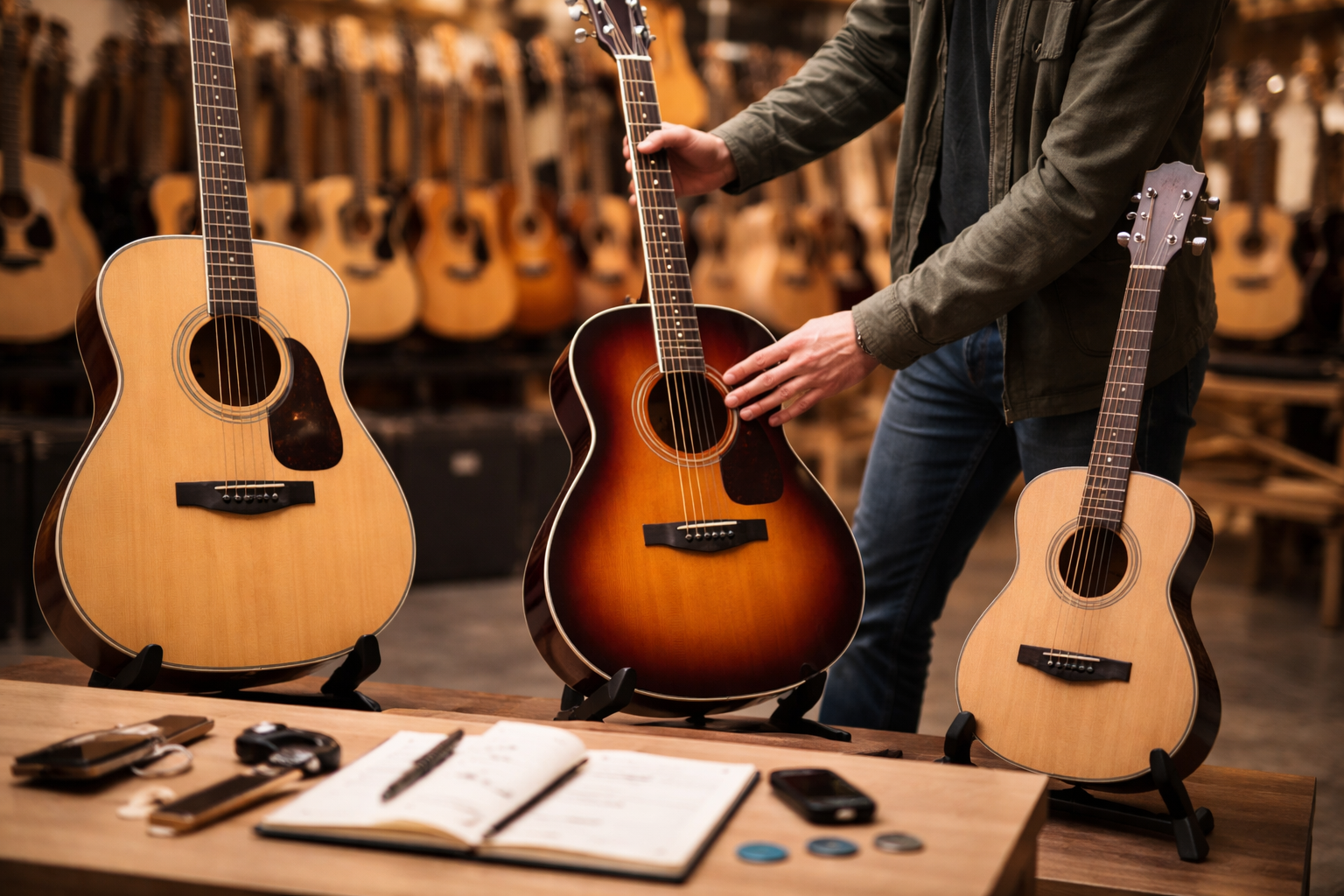
Both have value. If you’re unsure, try them in a store side-by-side to feel the difference in playability and sound.
Understanding Amplifiers and Effects
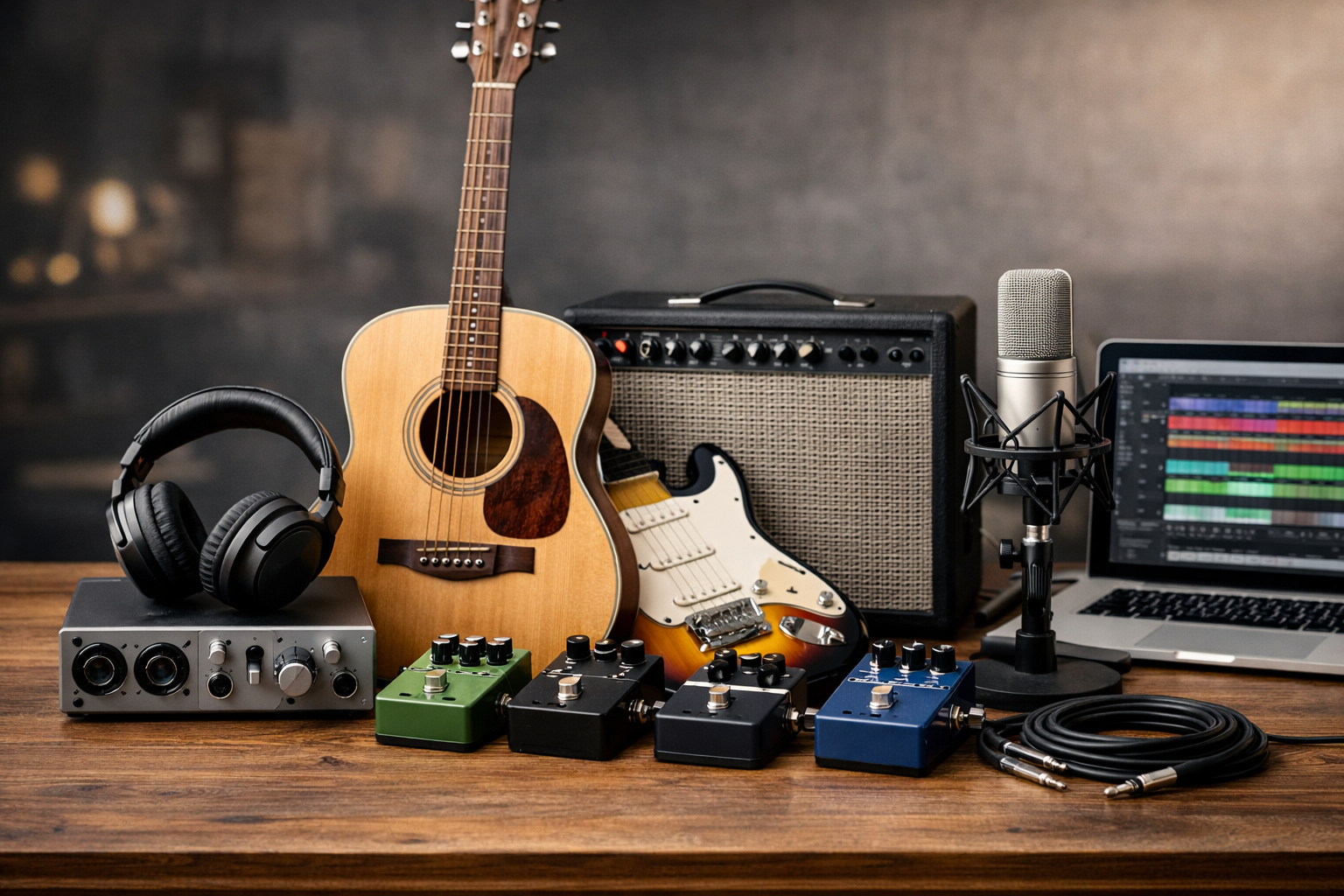
Once you pick an electric guitar, amplifiers and effects pedals will shape your tone. In 2026, affordable modeling amps give you a range of presets that emulate classic sounds without bulky hardware. Pedals offer creative options like:
- Overdrive and distortion
- Reverb and delay
- Modulation (chorus, flanger, phaser)
Don’t buy too many pedals right away. Start with essentials like a tuner, a quality overdrive, and a delay — then expand based on the sounds you want.
Recording Gear That Makes a Difference
Home recording has never been more accessible. Key pieces of equipment include:
Audio Interfaces
The bridge between your instrument and computer. Look for low latency and solid preamps.
Microphones
- Condenser mics for vocals and acoustic instruments
- Dynamic mics for amplifiers and live recording
DAW Software
Digital Audio Workstations let you record, edit, and mix. Popular choices offer built-in instruments, effects, and automation.
Quality doesn’t require breaking the bank — many interfaces and mics under mid-range prices deliver professional results.
Smart Gear: Integrating Digital Tools
Instruments and gear with smart features (Bluetooth, app control, preset storage) are more common now. These help you:
- Store and recall settings quickly
- Edit tones on the fly
- Sync with software for recording or learning
But beware of fads. Smart controls should enhance your creativity, not complicate basic playing functions.
Ergonomics and Playability First
Comfort is vital. Gear that feels right encourages practice. Test things like:
- Neck shape and string action on guitars
- Weight and balance of headphones or instruments
- Controller or keyboard feel for electronic gear
Never underestimate how physical comfort affects endurance and progress.
Budgeting and Long-Term Value
Money spent wisely goes further. Build your setup step by step:
- Start with essentials (instrument, reliable headphones)
- Add recording gear if needed
- Expand with effects and accessories
Don’t chase the most expensive gear first — many mid-tier options outperform entry-level models by a wide margin.
Maintenance and Care
Keeping gear in good condition extends its lifespan. Tips include:
- Clean instruments after use
- Store electronics in a dry place
- Replace strings, batteries, and cables regularly
Proper care keeps your setup reliable and sounding great — and protects your investment.
Choosing Gear That Grows With You
Music is a journey. Your gear should support where you are now, but also where you want to go. Reassess your setup every year or two as your skills and goals evolve.
Remember: great sound comes from skill, creativity, and gear that feels like an extension of your ideas.
If you want expert gear recommendations and reviews like this, Gistnic publishes hands-on content on instruments, accessories, and the stories behind them.