Your acoustic guitar is more than gear — it’s the link between your hands and your sound. Good care keeps it sounding sweet, playing smoothly, and lasting for decades. This guide goes beyond basics to give you practical routines, pro tips, and troubleshooting ideas you can actually use.
1. The Basics: Why Guitar Maintenance Matters
Acoustic guitars are primarily wood and metal. Wood reacts to humidity and temperature. Metal (strings, frets, tuners) oxidizes with sweat and air. Neglect these and you’ll see dull tone, buzzing frets, warped necks, or cracked tops. Good maintenance prevents all of that.
Maintenance isn’t complicated — it’s consistent. Just a few minutes habitually will keep your guitar in great shape.
2. Humidity, Temperature & Storage
Humidity Is King
Wood expands in humid conditions and contracts when dry. Too dry (below ~40% relative humidity) causes cracks, shrinks the top, and twists the neck. Too humid (above ~60%) can swell the wood and dull the tone.
What to do:
- Use a case humidifier if you live in dry climates or heat season.
- Keep a hygrometer inside your case to monitor %RH.
- Aim for ~45–55% RH for most guitars.
Temperature
Rapid temperature swings stress glue joints and wood. Don’t leave your guitar in hot cars, near heaters, or next to open windows with cold drafts.
Best Storage Practices
- Go case first — gig bags and hard cases equal better climate stability than wall mounts or stands.
- Don’t rest it on the floor where pets, shoes, or humidity spikes can reach it.
3. Daily & After-Playing Care
A few habits after each session make a big difference:
- Wipe down strings with a clean microfiber cloth.
- Wipe the body and fretboard where your hands touched.
- Quick scan — any loose parts, weird noises, or sticky areas?
Your hands leave oils and sweat that corrode strings and grind into the finish and wood. Wiping prevents buildup.
4. Deep Cleaning: Tools & Steps
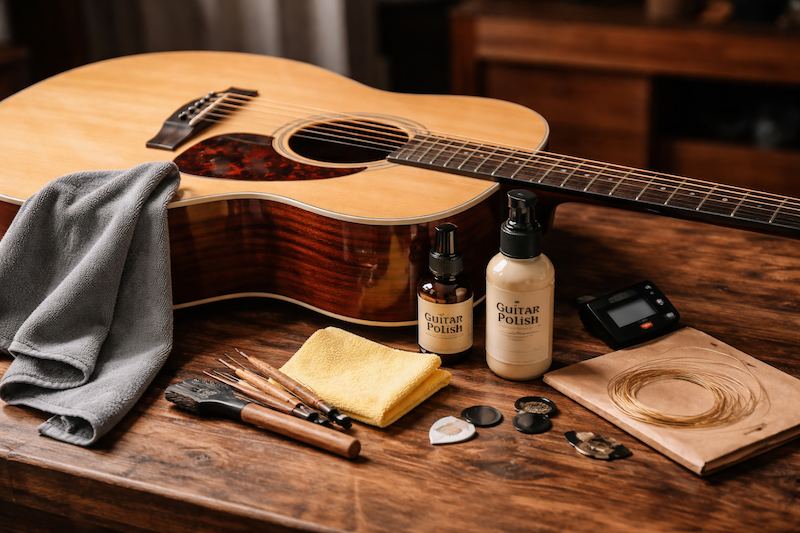
What You’ll Need
- Microfiber cloths (multiple)
- Guitar polish (appropriate to finish)
- Fretboard cleaner/conditioner (for unfinished fretboards)
- Q-tips or soft brush for hardware and fret ends
Body Cleaning
Use a guitar polish safe for your finish. Apply cleaner to the cloth, not the guitar, and wipe gently. Avoid household cleaners — they can strip finish or leave residues.
Fretboard
- If it’s unfinished rosewood/ebony: a tiny amount of fretboard oil can rehydrate wood once or twice per year.
- If it’s maple or finished fretboard: clean with a dry or slightly damp cloth only.
Hardware
Use a dry cloth or soft brush to remove dust from tuners, saddle area, and bridge pins. Grease buildup around the tuning gears can slow tuning stability.
5. Strings: Changing, Cleaning, Choosing
When to Change Strings
Strings don’t last forever. You’ll know it’s time when:
- The tone feels dull or lifeless.
- They feel sticky or grimy.
- They’ve been on for weeks of frequent play.
- Tuning stability suffers repeatedly.
How to Clean Strings
After each play, wipe down with a cloth. A dedicated string cleaner can help, but regular wiping is the biggest factor.
Choosing Strings
Strings affect feel and tone. Light gauges are easier to bend, heavier gauges give fuller tone and stronger projection. Try a few brands and gauges to find your preference.
6. Neck, Truss Rod & Action
The neck bow and string action define playability. If the neck is too bowed forward or backward, buzzing or choking notes happen.
- Check straightness by sighting down the neck from above.
- Action should feel comfortable, not rattly or too high.
- Truss rod tweaks can correct minor relief issues.
If you’re unfamiliar with truss rod adjustments, a professional setup once or twice a year is worth it. Setups make the guitar play like new and can fix action, intonation, and buzzing.
7. Bridge & Saddle
Check saddle height and bridge pins each time you change strings. If pins are loose or the saddle is worn, intonation and tone suffer. Tighten pins gently and replace worn parts as needed.
8. Frets: Wear & Buzzing
Frets wear over time, especially where you play most (lower frets around common chords). Light wear isn’t terrible, but deep grooves cause fret buzz and dead spots.
Regular cleaning and occasional professional fret dressing will keep notes ringing true. If frets are badly worn, refretting is a longer-term repair a tech can handle.
9. Routine Checks (Weekly → Monthly → Yearly)
Weekly
- Wipe down guitar
- Inspect strings for corrosion
- Check for loose hardware
Monthly
- Check humidity readings
- Deep wipe bridge, fretboard edges, tuners
- Recondition fretboard if dry
Yearly
- Professional setup (truss rod, action, intonation)
- Change strings fresh
- Inspect frets for significant wear
10. Transport and Gig Care
If you travel with your guitar:
- Use a sturdy case (hard case is best for flights).
- Loosen strings slightly on long trips to reduce tension shifts.
- Pack a small care kit (cloth, tuner, spare strings, allen keys).
- Don’t check guitars as airline luggage — carry on when possible.
11. Quick Troubleshooting
Buzzing Frets
Could be neck relief, high/low fret, or action too low. A setup fixes most cases.
Dry or Dull Tone
Likely old strings, buildup, or dry wood. Change strings, clean, check humidity.
Tuning Instability
Check string winding, nut slots, tuners, and temperature shifts. Lubricate nut lightly and secure tuners if needed.
12. Final Thoughts
Acoustic guitar care doesn’t need to be complex — it needs to be consistent. With the right habits, your guitar will reward you with better tone, smoother playability, and fewer surprises. Whether you play daily or occasionally, maintaining your instrument preserves your investment and keeps your music sounding great.
Happy playing.