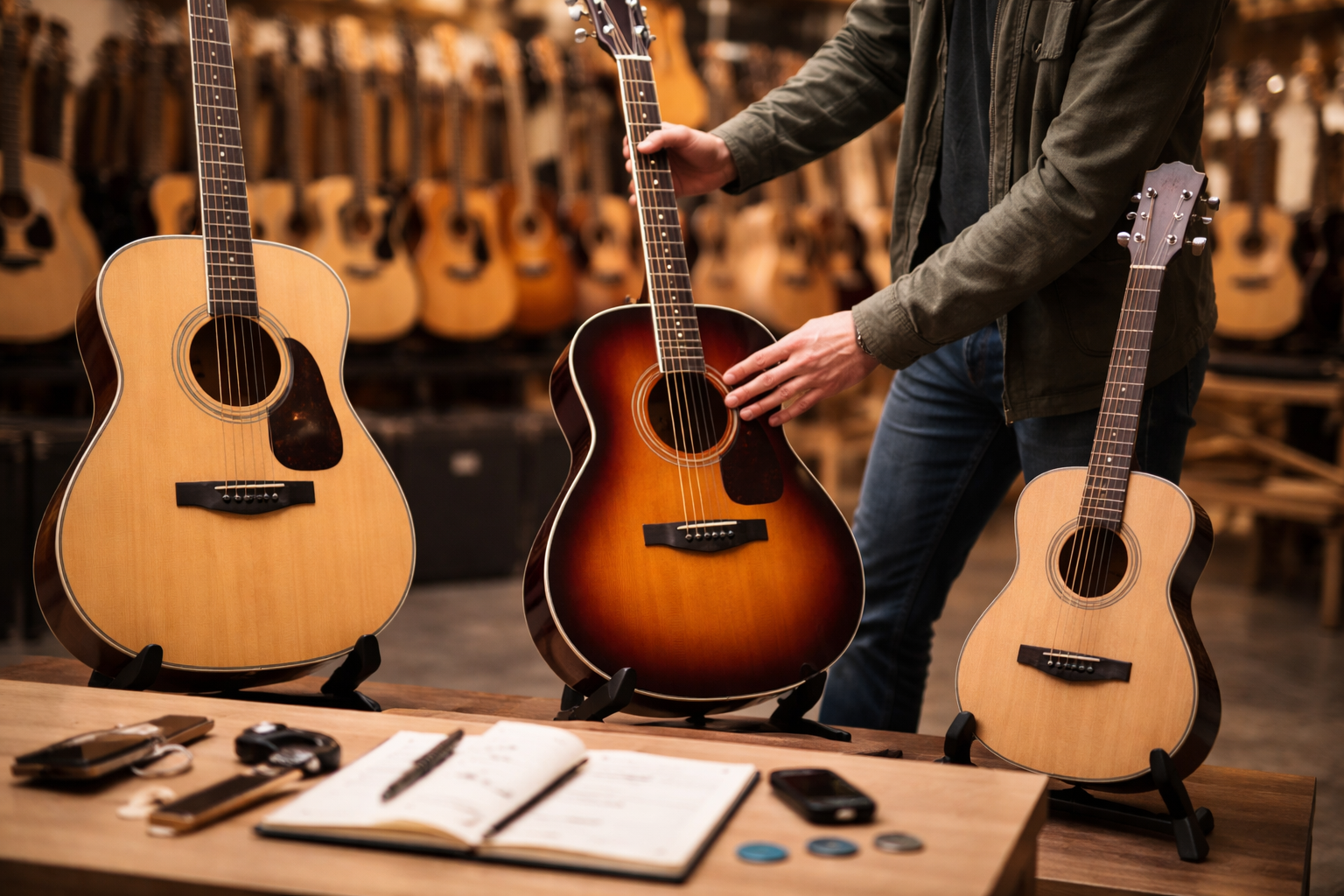
Buying your first acoustic guitar is exciting… right up until you open five tabs, see 200 models, and suddenly feel like you need a PhD in tonewoods just to strum a G chord.
The good news: you don’t need the “perfect” guitar. You need the right first guitar—something comfortable, playable, and reliable enough that you actually want to pick it up every day.
Here’s a simple, no-stress guide to choosing your first acoustic guitar without wasting money or getting stuck in analysis paralysis.
1) Start With Comfort, Not “Tone”
Beginners usually think the best guitar is the one with the best sound. In reality, the best first guitar is the one that feels easy to play.
If the guitar is uncomfortable, your hands hurt, and every chord feels like a fight, you’ll practice less. That’s the part nobody tells you.
Before you worry about “warm lows” and “sparkly highs,” check these comfort factors:
- Body size: Don’t automatically buy the biggest guitar you see.
- Neck feel: Some necks feel slim and fast, others feel chunky.
- String height (action): Too high = painful and frustrating.
If you can, hold a few guitars in your lap. The one that feels natural is already winning.
2) Pick a Guitar Body Shape That Fits You
Acoustic guitars come in different body styles, and yes, it affects sound—but it also affects how comfortable it is against your arm and chest.
Here’s the beginner-friendly breakdown:
Dreadnought
The classic “big acoustic” shape. Loud, strong bass, great for strumming. Also the most common option in shops.
- Best for: pop songs, campfire strumming, bigger sound
- Watch out for: can feel bulky if you’re smaller or like relaxed playing
Concert / Grand Concert
Slightly smaller body with a balanced sound. Often more comfortable for beginners and long practice sessions.
- Best for: mixed playing, learning comfortably, lighter feel
- Bonus: usually easier to control dynamics and clarity
Parlor / Travel Size
Smaller guitars that feel “friendly.” Not as loud, but very comfortable and fun to play.
- Best for: small hands, casual playing, easy handling
- Tradeoff: less bass and volume than larger guitars
If you’re unsure, a concert-sized acoustic is often the safest “first guitar” choice.
3) Steel Strings vs Nylon Strings (Classical)
This is one of the most important decisions, and it changes how your hands feel on day one.
Steel-string acoustic
This is what most people picture when they think “acoustic guitar.” It’s great for modern pop, rock, singer-songwriter, and most chord-based playing.
- Pros: bright sound, works for most music styles, common learning path
- Cons: tougher on fingers at first (normal beginner pain)
Nylon-string (classical) guitar
Often softer on fingertips and feels “gentler.” Great for fingerstyle, classical, and some softer pop arrangements.
- Pros: easier on fingers, warm tone, great for fingerpicking
- Cons: wider neck can feel harder for chord shapes at first
If you want to play modern songs with chords and strumming, go steel-string. If you want a softer feel and fingerstyle, nylon is a solid first step.
4) Don’t Ignore “Playability” (It Matters More Than Brand)
Two guitars can look identical but feel completely different to play.
One of the biggest beginner mistakes is buying a guitar that hasn’t been properly set up. A simple setup can make a cheap guitar feel surprisingly good, and a bad setup can make an expensive guitar feel awful.
What “playability” basically means:
- Chords aren’t painfully hard to press
- Notes don’t buzz constantly
- The guitar stays in tune reasonably well
- It feels “easy enough” to keep practicing
If you’re buying from a music store, ask them:
“Can you check the action and do a basic setup?”
This one sentence can save your first month of practice.
5) What to Look For in the Store (Quick Checklist)
If you’re trying guitars in person, here are practical checks you can do even if you barely know how to play:
- Tuning stability: Tune it up, strum for a minute, check if it drifts quickly.
- Neck comfort: Hold a basic chord shape. Does your hand feel cramped or fine?
- Fret buzz: Play a few notes on different frets. Buzzing everywhere is usually a setup issue.
- Sharp fret ends: Run your finger along the side of the fretboard. Sharp edges feel cheap and annoying.
- Overall feel: Do you want to keep holding it? That matters.
You don’t need perfection. You want “good enough that it doesn’t fight you.”
6) How Much Should You Spend?
You can absolutely start on a budget guitar, but there’s a realistic sweet spot where quality jumps up fast.
In most cases:
- Too cheap: can be hard to play, won’t stay in tune, discouraging
- Mid-range beginner guitar: reliable, comfortable, good value
- High-end: nice, but not necessary for learning the basics
A simple rule: spend enough that the guitar feels solid, and then invest in a proper setup if needed. That combination beats a “fancy guitar” with bad playability every time.
7) Don’t Forget the Essentials
Your first guitar purchase usually needs a few small extras. Keep it simple:
- Guitar tuner (app tuner is fine to start)
- Extra picks (you will lose them)
- Capo (optional, but very useful for popular songs)
- Gig bag (basic protection is better than none)
- Spare strings (you’ll need them sooner than you expect)
And if you want the fastest improvement with the least pain:
Get your guitar set up properly. It’s one of the best upgrades you can buy.
Final Thought: Your First Guitar Should Make You Want to Play
You don’t need to chase the “perfect” model, the “best wood,” or the most famous brand.
You just need a guitar that:
- feels comfortable in your hands
- stays in tune
- doesn’t hurt you every time you practice
- makes you want to pick it up again tomorrow
Once you build the habit and get better, you’ll understand exactly what you want for your next guitar. But for your first one? Keep it simple and choose the guitar that makes practicing feel easy enough to be fun.


